


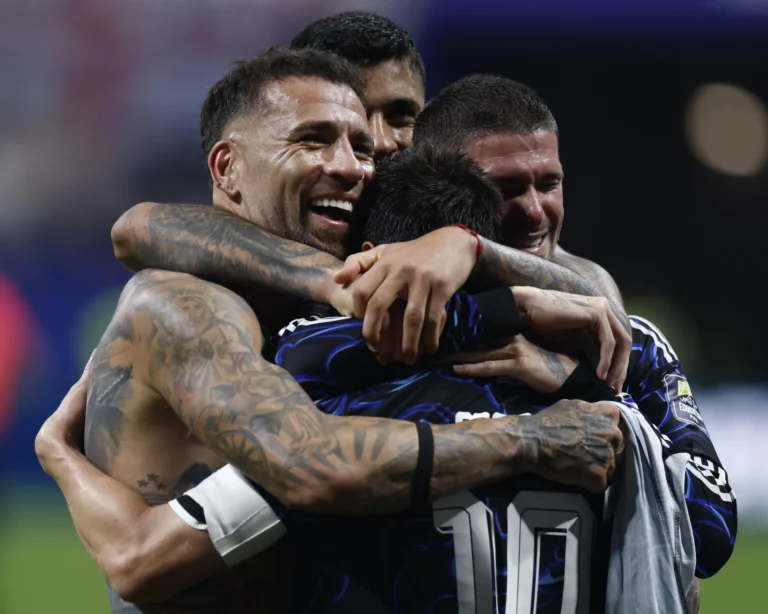

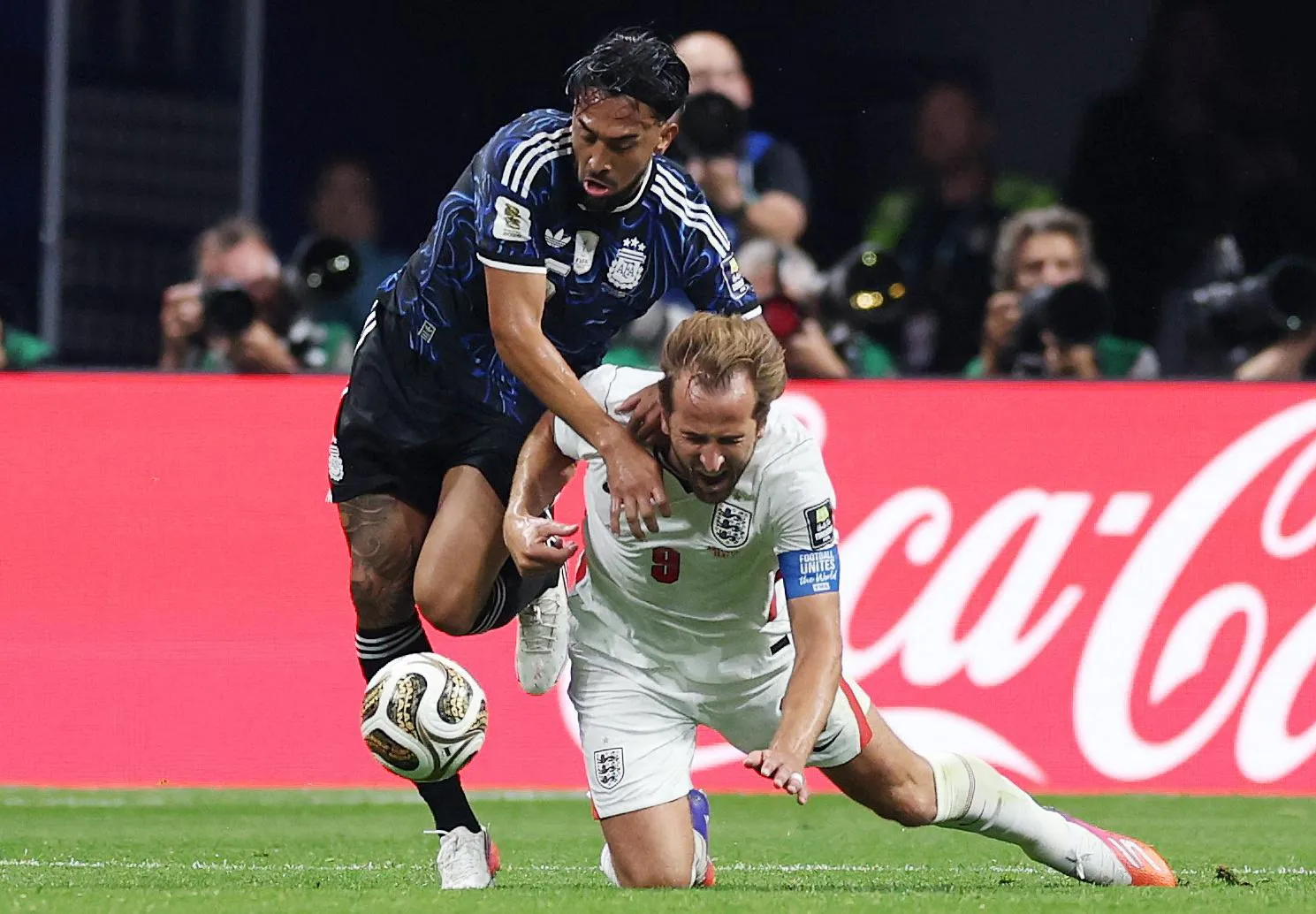
After netting the goal that secured Argentina’s spot in the World Cup final, Lautaro Martínez was visibly emotional during a touchline interview, breaking down in tears. He reflected on his father’s gift of his first pair of trainers and how his mother consistently made his bed when he transitioned to living in a club pension as a teenager, emphasizing that these gestures meant more to him than any trophy.
Head coach Lionel Scaloni expressed some concern following England’s goal but maintained unwavering faith in his team. He noted, “They grew up in environments where they were afraid of nothing, in which they’ve always been the best at what they do,”
Scaloni described their play style as reminiscent of children. “As small children they competed and everyone expected so much of them; responsibility doesn’t weigh them down.” He views the players as spirited, untamed, and spontaneous individuals. With immense expectations resting on the squad, the coaching staff encourages a love for the game and a childlike connection to the ball.
The Nobel laureate Simon Kuznets categorized countries into four groups: developed, underdeveloped, Japan, and Argentina. This classification highlights Argentina’s unique position, particularly in an age where complexity and nuance often seem overlooked.
A meme circulating online states, “They’re not thinking: ‘We’re about to lose a semi-final.’ They’re thinking about playing football, which is what they’ve done all their lives.” This reference relates to historical battles of independence over two centuries ago, noting two British military incursions that faced significant resistance. While these invasions are a staple of Argentine history lessons, few in Britain seem aware of them.
The notion that Argentina is a land of anti-colonial resistance surprises many from the northern hemisphere, who often cite the European descent of much of its populace. Throughout the 20th century, numerous footballers leveraged their European heritage to acquire nationalities, enabling them to sign with prominent European clubs. Prior to the Bosman ruling, this was essentially the only pathway to lucrative opportunities in major leagues.
Since severing ties with the Spanish crown in 1810 and 1825, Argentina has embraced diverse peoples from around the globe. An Argentine may have a Guaraní mother and an Eastern European father. After World War II, many Nazis sought refuge here, while one of the largest Jewish communities outside of Israel continues to pursue justice against them. Carlos Menem, the son of Syrian immigrants, approved the construction of Latin America’s largest mosque during his presidency. Evangelical preachers have established a presence throughout the vast country.
Indigenous groups are actively fighting to reclaim their rights and lands, while Afro-descendants in Argentina are utilizing social media to amplify their voices. New waves of migration from Russia and Africa are welcomed, alongside Venezuelans joining the ranks of South American newcomers. The culinary landscape reflects this rich tapestry, with Japanese-Peruvian fusion eateries, vibrant Chinatown, and Ukrainian cuisine flourishing.
Argentina is a diverse and inclusive society. However, this does not imply that everyone coexists in a utopia free of conflict. The nation grapples with polarization, classism, prejudice, and inequality just like many others.
Football stands as a unifying element of national identity, whatever that may entail. The sport is cherished as both an art and an escape. Argentina excels in football, exporting players and coaches alongside its agricultural products. The most underprivileged children in vacant lots engage in improvised kick-ups with whatever they can find, honing their skills in tight spaces, while the country’s tradition of youth development is commendable.
Daniel Passarella, captain of the 1978 World Cup-winning team, once remarked that Argentina has always aspired to be among the elite in various fields but is often seen as inferior. “To kick the Spanish out, first we had kick out the British. History is cyclical and repeats itself.” he stated.
At this World Cup, Argentina’s ties to FIFA and Donald Trump challenge the narrative of underdogs seeking vengeance. The phenomenon of