


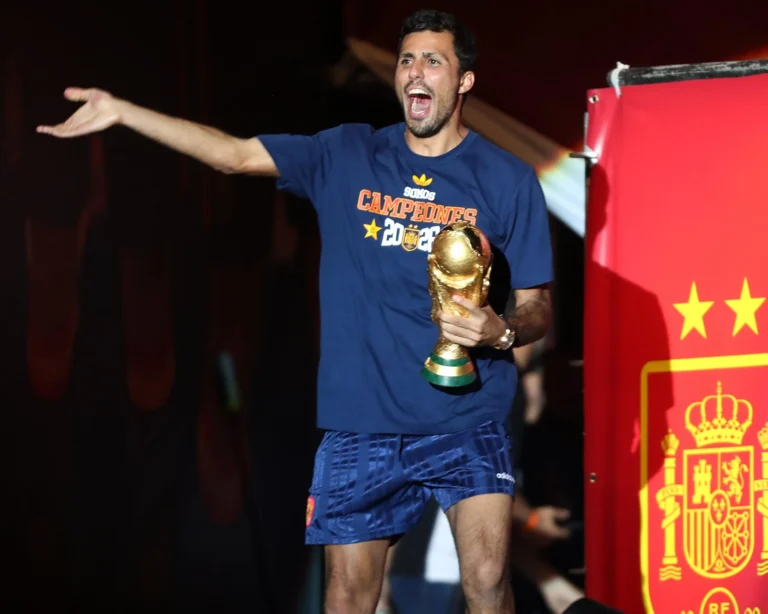
Rodri’s recent victory in securing the World Cup marks a significant milestone in his career, as he now holds an impressive array of titles, including the World Cup, the European Championship, the Champions League, and the Ballon d’Or. Owen Bagnall posed an intriguing question.
“Adding the World Cup to his résumé means Rodri has now won the World Cup, the European Championship, the Champions League, and the Ballon d’Or,”
While such an accomplishment is uncommon, a select group of players have achieved it before him.
Historic Achievements in Football
Franz Beckenbauer and Gerd Müller were the first to reach this remarkable goal on July 7, 1974, when West Germany triumphed over the Netherlands to clinch the World Cup, with Müller scoring the winning goal. Both athletes entered the tournament after having won the 1974 European Cup with Bayern Munich and had previously secured the European Championship with their national squad. Beckenbauer captained all three teams, while Müller found the net in each final. Müller had previously won the Ballon d’Or in 1970, followed by Beckenbauer in 1972.
Nearly thirty years later, Zinedine Zidane joined this elite group by winning the Champions League with Real Madrid in 2002, adding to his earlier accolades that included the 1998 World Cup, the 1998 Ballon d’Or, and the 2000 European Championship.
Rivaldo soon followed in 2003, having won the Copa América with Brazil in 1999 and claimed the Ballon d’Or that same year. He completed his collection with the 2002 World Cup and the 2003 Champions League, though he was an unused substitute during the final against Juventus.
Similarly, Ronaldinho’s achievement has a slight caveat; although he was part of the Brazil squad during the 1999 Copa América, he did not play in the final. Nevertheless, he earned the medal and later added the 2002 World Cup, the 2005 Ballon d’Or, and the 2006 Champions League with Barcelona.
In a predictable turn of events, Lionel Messi also finds himself among this distinguished group. He first won the Champions League in 2006 as part of the Barcelona team, but his significant contributions came during their 2009 victory. The Ballon d’Or followed in 2009, and after a prolonged wait for international recognition, he finally celebrated victories with the 2021 Copa América and the 2022 World Cup.
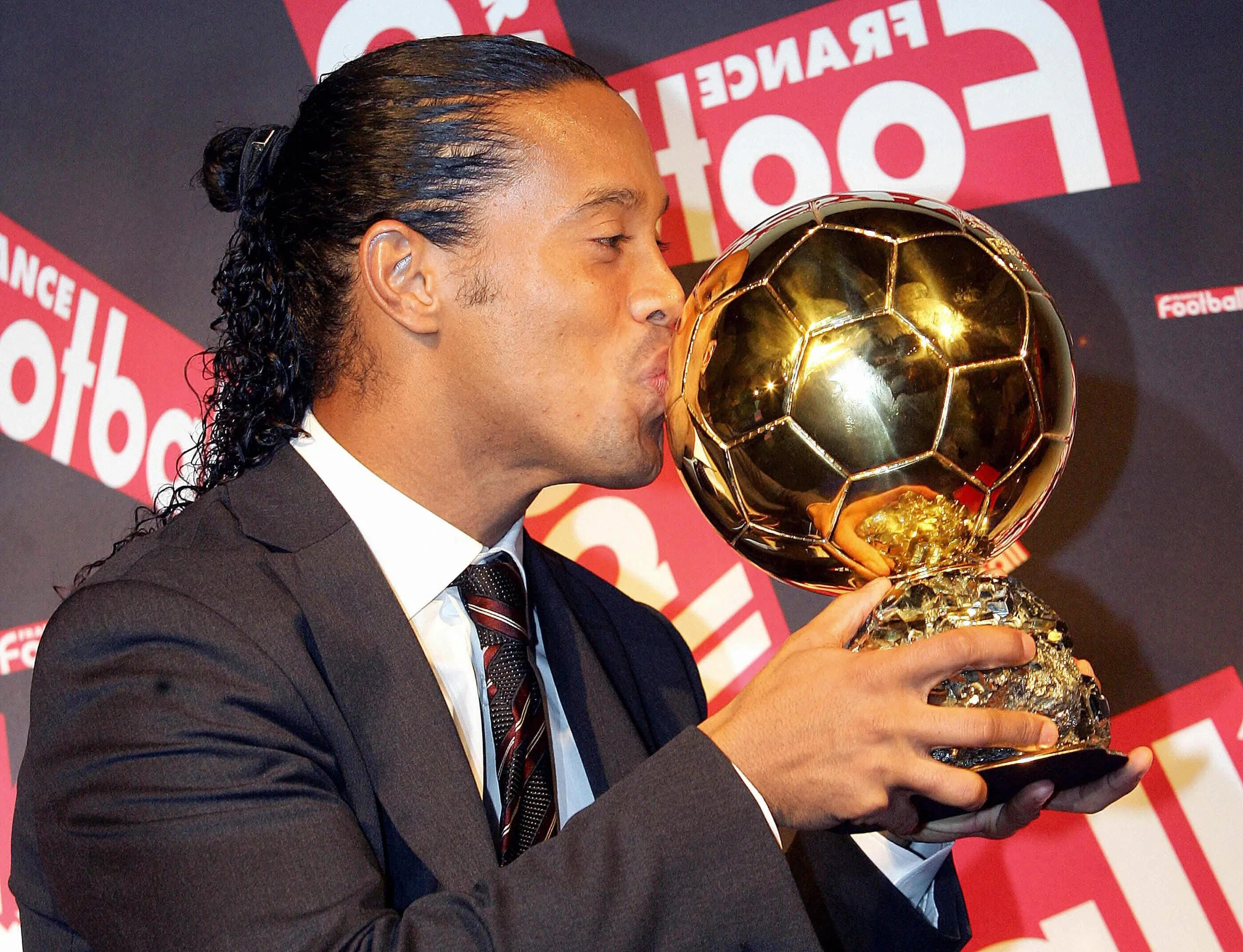
Rodri Joins the Elite Circle
Most recently, Rodri joined this prestigious circle on Sunday, enhancing his collection with the World Cup alongside the 2023 Champions League, the 2024 Euros, and the 2024 Ballon d’Or. Beckenbauer remains the only player to have achieved this quartet of titles in a shorter timeframe, accomplishing it within just two years.
The women’s game has yet to see a player accomplish this full set, primarily because the Ballon d’Or Féminin has only been awarded for seven years. Alexia Putellas and Aitana Bonmatí have won five of those awards collectively and both possess a Champions League title and a World Cup. They will, however, have to wait until the 2029 European Championship for another chance to complete their own collection. Megan Rapinoe, who won the Ballon d’Or Féminin in 2019, also boasts a World Cup and a Concacaf W Championship, though she has yet to secure a continental club championship, which is understandable given that Concacaf only introduced one in 2024.
Most World Cup Assists
“Has anyone else ‘completed football’ like this?” asks Michael Ross. While this question appears straightforward, it is actually complex. Detailed statistics from the tournament’s early years are nearly nonexistent, and the lack of television coverage means much of that history remains undocumented. Therefore, we can only accurately analyze records from 1966 onward. The 2026 tournament, as anticipated due to the increased number of matches, set a new record for assists in a single tournament, with a familiar name emerging at the top of the all-time list.
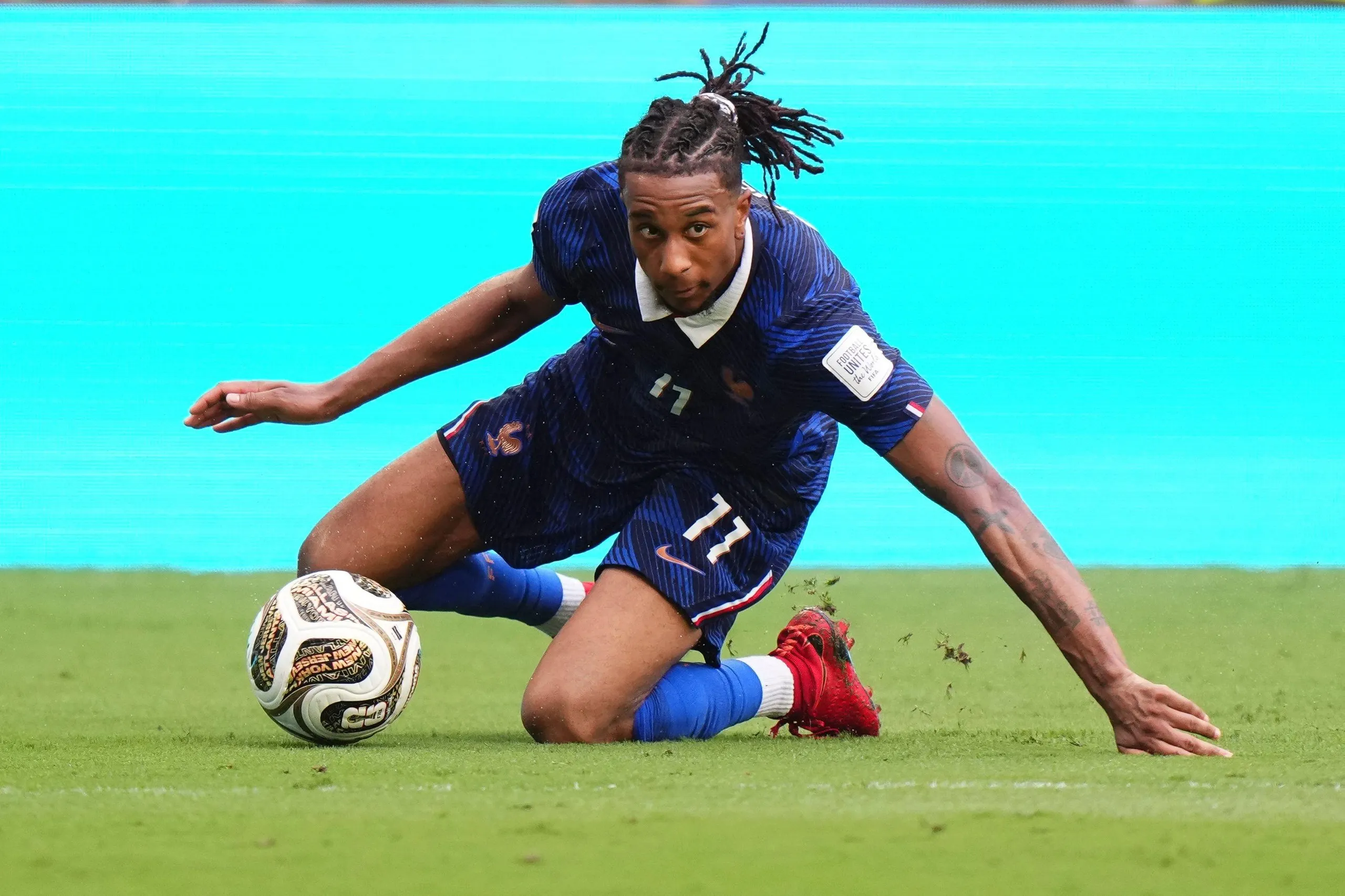
| Most Assists at One Tournament (from 1966) | Player | Country | Year |
|---|---|---|---|
| 7 | Michael Olise | France | 2026 |
| 6 | Pelé | Brazil | 1970 |
| 5 | Robert Gadocha | Poland | 1974 |
| 5 | Pierre Littbarski | West Germany | 1982 |
| 5 | Diego Maradona | Argentina | 1986 |
| 5 | Thomas Hässler | Germany | 1994 |
Most overall assists (from 1966):12Lionel Messi (Argentina, 2006-26),8Diego Maradona (Argentina, 1982-94),7Grzegorz Lato (Poland, 1974-82), Pierre Littbarski (West Germany, 1982-90), Michael Olise (France, 2026);6Pelé (Brazil, 1966-70), Uwe Seeler (West Germany, 1966-70), Thomas Hässler (Germany, 1990-98), David Beckham (England, 1998-2006), Francesco Totti (Italy, 2002-06), Bastian Schweinsteiger (Germany, 2006-14), Thomas Müller (Germany, 2010-22), Ivan Perisic (Croatia, 2014-26), Kylian Mbappé (France, 2018-26).
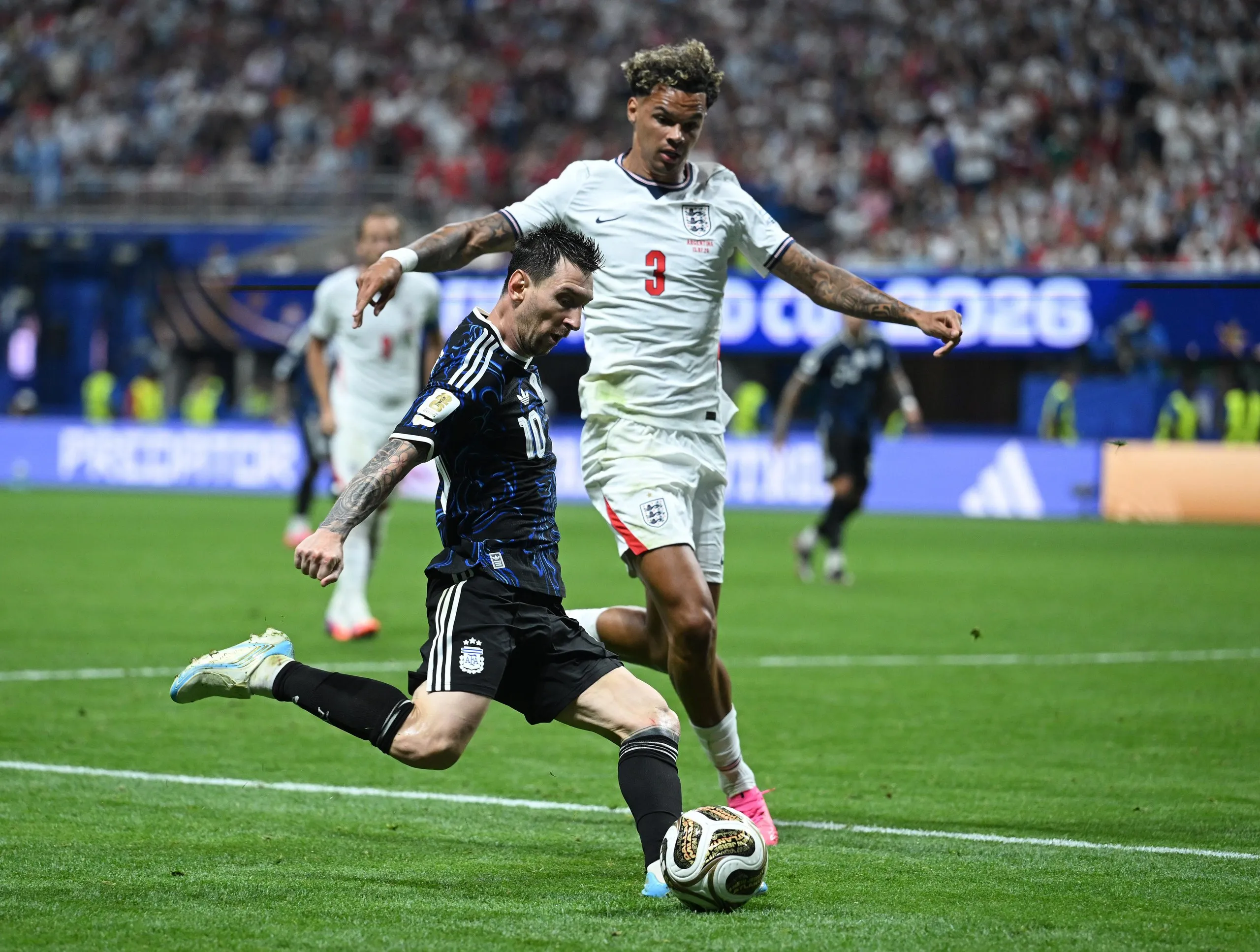
Most assists for England:6David Beckham,4Harry Kane,3Bukayo Saka, Anthony Gordon;2Tommy Taylor, Bobby Moore, Keith Newton, Steve Hodge, Paul Gascoigne, Harry Maguire, Raheem Sterling, Phil Foden, Jude Bellingham, Declan Rice.
Lowest Caps for Ballon d’Or Winners
“Who has the most World Cup assists?” shares Steve Richards. “When reading about King Kev at his sad passing this week, I was surprised to learn that he only had 63 caps,” In earlier eras, international matches were less frequent, leading many past Ballon d’Or winners to accumulate fewer than 50 caps. This includes Luis Suárez (Spain, 32 caps), Igor Belanov (USSR, 33), and George Best (Northern Ireland, 37).
However, the record for the fewest caps among Ballon d’Or winners belongs to Omar Sívori, who earned 19 caps for Argentina in the mid-1950s before transitioning to play for Italy, where he was exiled by La Albiceleste. He later made nine appearances for Italy during the 1960s, including in the 1962 World Cup, resulting in a total of 28 international appearances. Detailed insights about his career can be found in his Guardian obituary penned by Brian Glanville in 2005.
Among multiple winners, Alfredo Di Stéfano holds the record for the fewest caps with 41 for Spain, Colombia, and Argentina, along with his 1957 and 1959 Ballon d’Or victories. Johan Cruyff and Marco van Basten, both three-time winners, accumulated 48 and 58 caps, respectively, for the Netherlands.
World Cup Balls After the Tournament
“That seems very low, especially for a two-time Ballon d’Or winner. Is his number of caps the lowest for a Ballon d’Or winner, especially a multi-winner?” inquires Jonathan Wilson (not that one) from 2014. During the 2014 World Cup, a total of 3,240 balls were utilized, with 20 designated for each match, all marked with matchday personalization (teams, date, and venue). Each team also received 20 training balls upon their arrival at their training camp in Brazil. So, what becomes of these balls? A FIFA spokesperson clarified, “What happens to World Cup balls used throughout the tournament,” Adidas, the ball’s manufacturer, elaborated, stating, “The balls are used after a tournament for souvenirs for the teams and referees, host cities, Fifa partners and the Fifa museum,”
Consolation Prizes in Football
“For this World Cup we opted for all used matchballs from the games to be given to the marketing teams in those countries involved in that particular game. However, not all markets opted to take up this option. Each local market team is then encouraged to run a giveaway through social media to allow fans the chance to win the balls.” begins James Mackenzie. “In the aftermath of England’s semi-final exit we may have overlooked the real winner on the evening,”
“Step forward Barcelona’s Anthony Gordon. Not only did he join the club of being a World Cup semi-final goal scorer for England he also bagged arguably the bigger award of a lifetime’s free access to Leeds Bradford airport’s VIP lounge! Are there any better example of a more ludicrous consolation prize in football?” writes Alan Kinsella. “I noticed that Irish Premier Division side Shelbourne recently appointed John Russell as the men’s team manager,”
“Their women’s team manager is Sean (Irish for John) Russell. They aren’t related. Is this a first having men’s and women’s team managers of the same name?” begins John Eales. “In August 1968, Plymouth Argyle hosted Exeter City in the first round of the League Cup. The match ended 0-0,”
- Mail us with your questions and answers