


In English football, the focus often shifts to individual players. However, the essence of the game lies in the collective effort. Spain’s impressive semifinal victory over France exemplified this, showcasing a cohesive understanding of timing, space, and their foundational principles. This unifying approach establishes them as the top team globally and suggests they may secure the World Cup title on Sunday.
Spain’s strength does not rest on standout players like Rodri, Lamine Yamal, or Pedri. Instead, it is the synergy of the entire midfield that drives their success. Their ability to achieve positional and numerical superiority is deeply embedded from a young age, positioning them as experts in manipulating time and space on the field. Against France, this cultural approach resulted in numerous instances of overwhelming four-on-two advantages in crucial areas.
As the final approaches, articles may highlight Rodri as the world’s finest in his role—an assertion that holds some truth considering his technical and tactical prowess. Nonetheless, it is vital to recognize that his individual talent does not solely account for Spain’s dominance. Reflect on the Euro 2024 final when Rodri had to exit at halftime; Martín Zubimendi’s introduction allowed Spain’s midfield to maintain control, illustrating that their methodology is rooted in collective development over time, rather than depending on any single player or a revolving door of managers.
How is this achieved? In Spain, every player—regardless of gender—is nurtured within a system founded on a clear set of beliefs and methodologies. The cultivation of all playing principles within this framework equips them for high-level competition. It begins with a fundamental 4-3-3 formation in possession, a starting point they adhere to across all age groups while maintaining positional flexibility. For instance, in 2024, they utilized Álvaro Morata as a traditional No. 9, while this summer, Mikel Oyarzabal, a false 9, effectively operated between the lines. Both tactical approaches have proven successful.
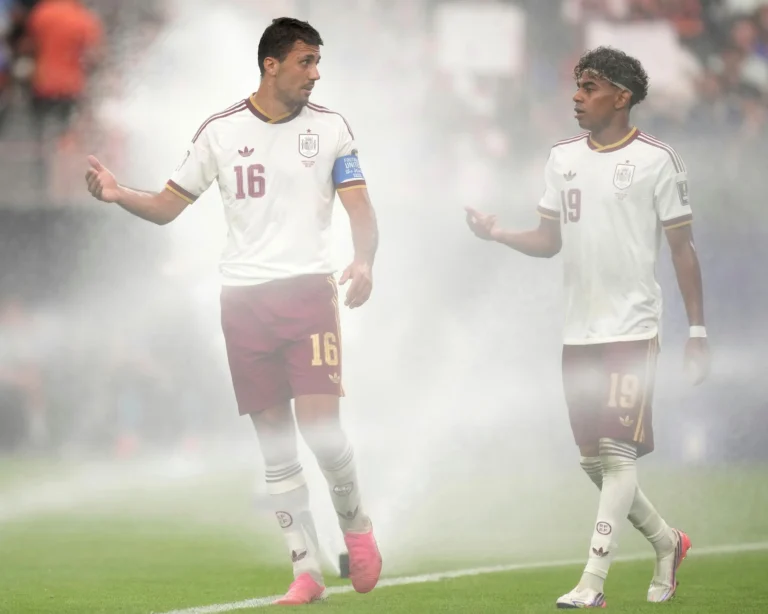
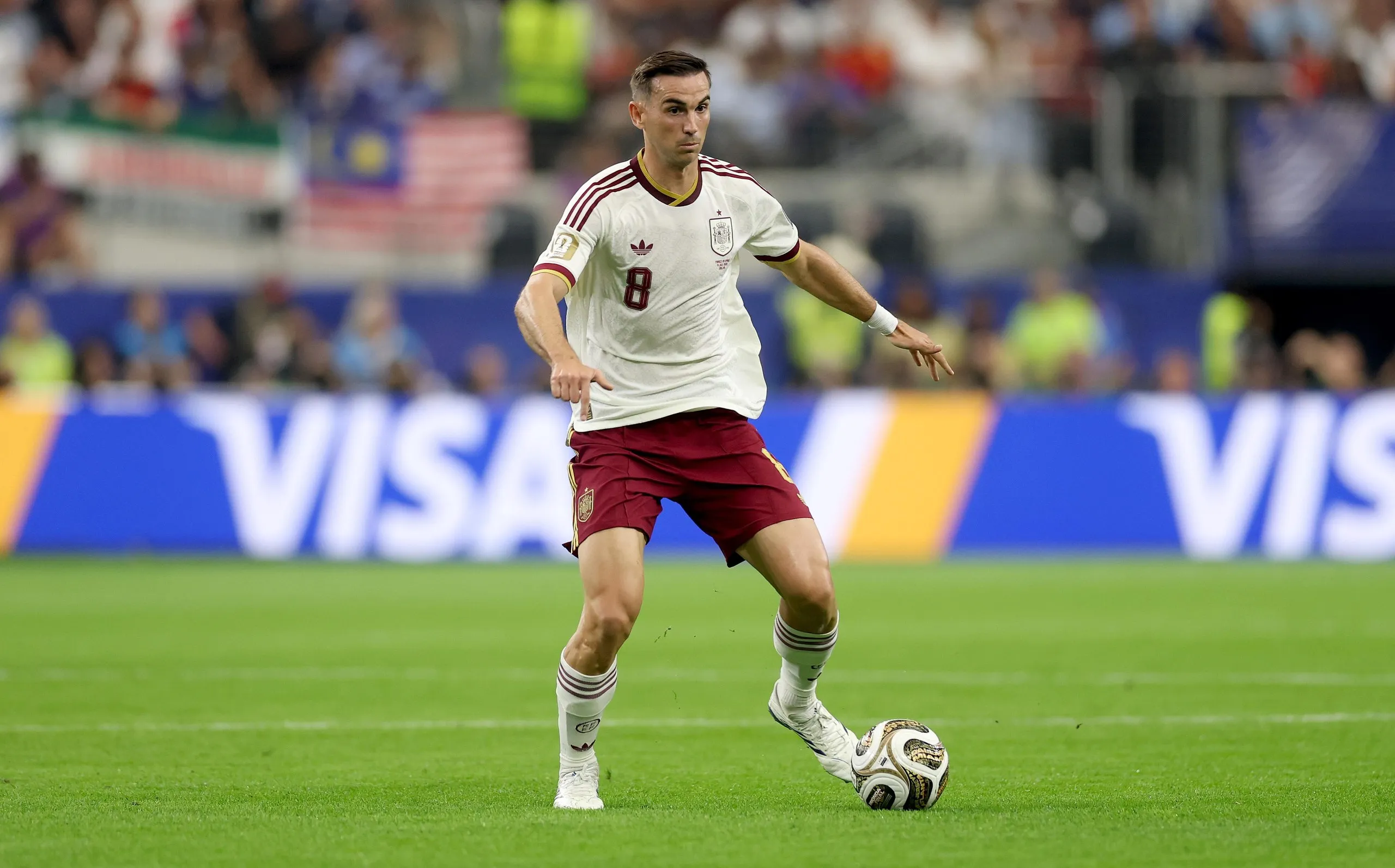
In this World Cup, Spain’s combination of Rodri, Fabián Ruiz, Dani Olmo, and Oyarzabal highlights a focus on fluid positioning rather than strict roles. Their ability to rotate, swap positions, and strategically move into advantageous spaces is paramount. They continuously assess how to create numerical superiority in any area of the pitch. When this cannot be achieved, they ask themselves, “How can we create a positional advantage with rotation?”
This ethos traces back to Johan Cruyff’s early Barcelona days, making Spanish teams unparalleled in executing these principles across men’s and women’s football. Their record includes nine Under-17 European Championships, three consecutive Under-19 finals, and five Under-21 Euros. This success mirrors the women’s game, with eight Under-19 women’s Euros titles—seven of which were won since 2017, including five in a row. Notably, Spanish law mandates athletes to accept national call-ups at all levels, a practice not universally adopted elsewhere. This commitment to youth national teams is crucial for honing players’ understanding of their roles under pressure during major tournaments.
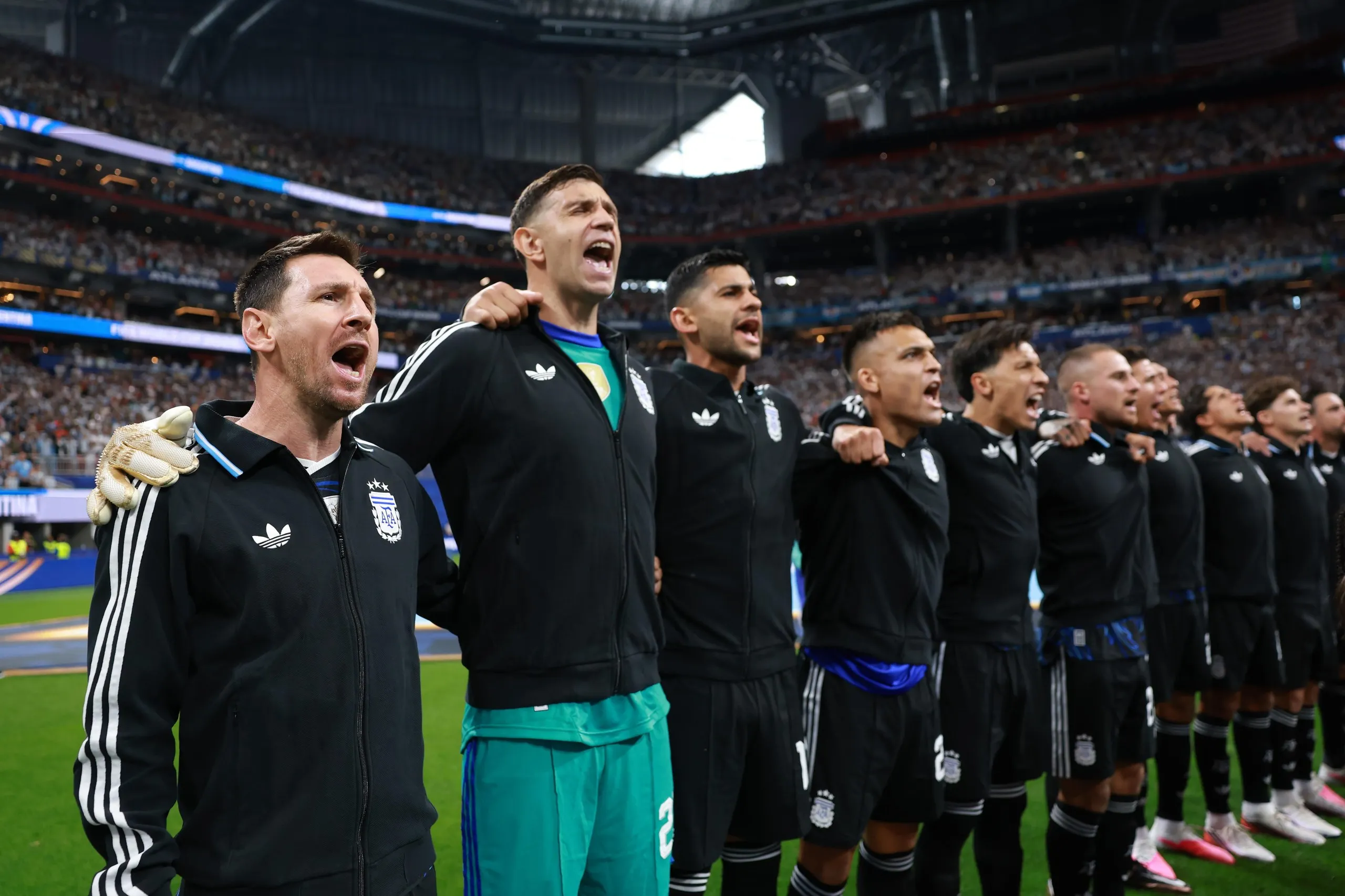
Argentina, too, exemplifies a strong collective, albeit in a contrasting manner. Sports psychologist Daniel Abrahams recently noted that Argentina’s players “sing their national anthem with gusto” and exhibit an aggressive approach in both pressing and duels. They fiercely compete, displaying passion and a deep connection to each other, allowing them to face challenges without succumbing to anxiety.
Recognizing the difficulty in achieving such a committed collective mindset is essential. The intensity of their dedication, the bond they share, and their connection with fans create an unparalleled atmosphere in sports. Their manager emphasizes their resilience in adversity, characterizing them as the warriors of international football. As such, they remain competitive in every match, even when they do not dominate possession, fighting until the final whistle.
Spain’s tactical approach involves skillfully shifting the ball across the pitch, exploiting initial target zones by moving midfielders accordingly. Attempting to match Spain man-for-man is futile; they are adept at breaking pressure and have evolved their game to include direct play and long passes into space. Their versatility has made them the world’s finest team. Prior to this tournament, I declared them as my favorites for the title, and I maintain that assertion.
For England, watching the final will likely be a painful experience. The question remains: why can’t they break through? Is it a reflection of their social and cultural fabric? I believe the answer lies in the mental aspects of the game. At the elite level, mental conditioning is as crucial as physical training to ensure emotions do not hinder performance under pressure. We must ponder why Argentina excels in critical moments while England struggles.
This situation transcends tactics or substitutions. We often react emotionally and shortsightedly in the aftermath of a semifinal loss. Long-term, we must explore our national psyche and understand what barriers prevent us from overcoming this challenge. All stakeholders—players, coaches, fans, media, and clubs—must contribute to this exploration.
Argentina’s unwavering belief against England was evident; they remained united, refusing to assign blame or seek fault. Our instinct is often to pinpoint individuals for praise or criticism. We must embrace the philosophy that in victory, we succeed as a collective, and in defeat, we share the responsibility as a collective.
This is precisely why Argentina and Spain find themselves in the final. Both nations possess a remarkable clarity about their identities, making them the most cohesive teams in the tournament.
- Spain
- Argentina
- World Cup 2026
- World Cup
- comment