


Ally MacLeod’s bold claim in 1978 about securing a gold medal is forever etched in Scottish football history, especially after Scotland’s disappointing results against Peru and Iran. Steve Clarke, in contrast, has always opted for a more cautious approach and refrains from making any grand predictions. However, the excitement surrounding Scotland’s upcoming World Cup campaign is palpable, and who can blame the fans for their optimism?
In their final match before making their first World Cup appearance in nearly three decades, Scotland showcased their dominance by overwhelming Bolivia. The anxiety surrounding their upcoming match against Haiti has dissipated, replaced by a newfound confidence. If Clarke’s squad maintains this level of intensity and efficiency, they could very well advance beyond the group stage for the first time in their international journey. This friendly match turned out to be more than just a routine affair; it sparked hope among Scottish supporters.
With a flurry of goals from Lawrence Shankland, Scott McTominay, and Ché Adams—who netted twice—Scotland raced to a 4-0 lead by halftime. While it’s important to acknowledge the limited challenge posed by Bolivia, it’s worth noting that Scotland might encounter similar circumstances in their Group C opener. Although the Scots eased off the gas in the second half, their approach remained commendable. The pivotal question now is whether they can replicate this performance when it truly counts.
Shankland has solidified his position as a likely starter for the Haiti match, joining the ranks of Andy Robertson, Aaron Hickey, McTominay, and John McGinn. Clarke is likely to consider pairing Adams alongside Shankland, especially given their strong synergy against Bolivia. Meanwhile, Ryan Christie’s standout performance has only improved his chances of making an impact in Haiti.
“We are as well prepared as we can be at this stage,” Clarke stated. “Now we must ensure we start the tournament on the right foot. It’s rare for me to receive everything I request, so I’m pleased with that. I now face some fantastic dilemmas regarding team selection.”
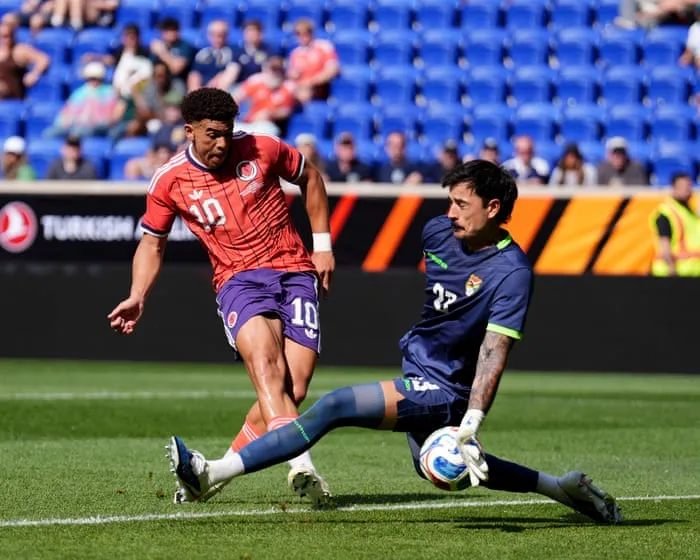
In the sweltering heat of New Jersey, Scotland kicked off impressively. Robertson linked up with Christie to deliver a precise cross that Shankland converted, despite Bolivia’s goalkeeper Guillermo Viscarra being unable to make a better save. This marked Shankland’s third goal in just two matches. Adams, lively throughout, came close to scoring before narrowly missing the target.
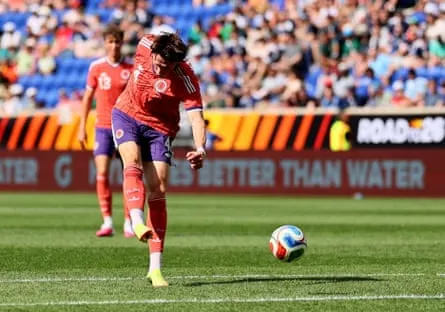
A second goal quickly followed, as Shankland set up McTominay, whose low shot from 18 yards left Viscarra grasping at air. The first drinks break offered brief respite for Bolivia, but it did little to change the tide of the match.
Scotland’s third goal was a beauty, with Hickey feeding the advancing Ben Gannon-Doak, who silenced critics by delivering a pinpoint cross to Adams, who found the net with ease. Typically, Scotland’s friendly matches have been lackluster, but they were in full control this time around.

This performance bodes well for Clarke and his squad, especially considering Bolivia’s higher ranking compared to Haiti, whom Scotland must defeat to advance to the knockout stage. Viscarra provided a moment of brilliance in the 40th minute with an impressive save from Gannon-Doak, leaving Robertson unlucky not to score from the subsequent corner.
Scotland matched a historical first-half scoreline that hadn’t been achieved since 1878 against England and hadn’t been seen in two decades against the Faroe Islands. Gannon-Doak, making a strong case for a World Cup starting position, surged forward from midfield to set up Adams, who scored after initially being denied by Viscarra. The Scots went into halftime with a commanding 4-0 lead, marking their second consecutive match with four goals.
“Ben did himself a world of good today,” Clarke remarked about Gannon-Doak. “We know what he brings to the team.”
In the 61st minute, Shankland inexplicably shot wide from a Kieran Tierney cross, while later, George Hirst came close to adding a fifth goal. With substitutions and the oppressive heat affecting their rhythm, Scotland’s tempo inevitably dropped. Scott McKenna, Dykes, and Nathan Patterson were the only outfield players who did not see action. Now, the challenge was to manage the game effectively, especially after the injury that dashed Billy Gilmour’s World Cup dreams a week prior.
This time, however, there were no distressing notes. Clarke is unlikely to channel the hubris of MacLeod as Scotland heads into the World Cup with newfound confidence.