



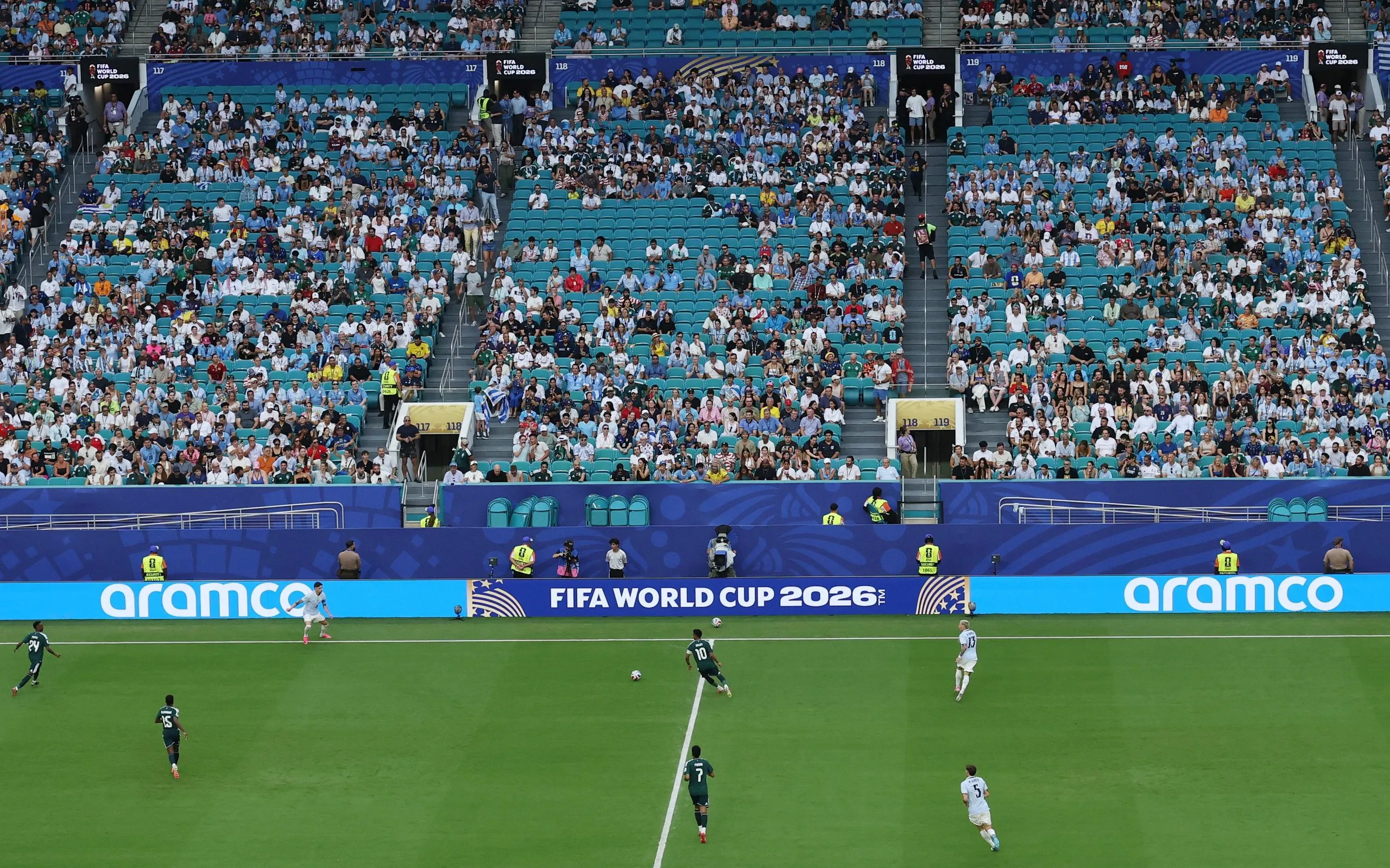
Fifa’s integration of aggressive American commercialism may have encountered limitations in Miami, a city renowned for entertainment. Despite only seven tickets listed as available on the official website at kick-off, numerous empty seats and vacant concourses were evident throughout the match, which ended in a tightly contested draw, leaving Group H in a state of uncertainty after Cape Verde’s unexpected draw with Spain earlier in the day.
Gianni Infantino has often likened the World Cup to 104 Super Bowls; however, the turnout suggests that locals need more persuasion. While the official attendance was reported at 62,764 out of a capacity of 64,478, many spectators arrived late, with Fifa sources attributing the delays to a crash on the highway.
Miami boasts more Instagram influencers per capita than either Los Angeles or New York, indicating that Fifa might have benefitted from engaging some influencers to help with ticket sales rather than relying on the ever-present IShowSpeed, whose exuberance has begun to annoy some high-profile guests in Fifa’s VVIP sections.
The city’s foundation on celebrity and allure means that Miami residents are hard to impress, and even ardent sports fans have a plethora of options. The Hard Rock Stadium has hosted six Super Bowls and regularly features on the Formula One circuit, making it clear that a group stage World Cup match involving two teams struggling to score was unlikely to be a significant event.
The empty seats highlighted the potential issues associated with Fifa’s dependency on the secondary ticketing market in the United States, as it is clear that tickets were sold. Given the face values of category one and two tickets at $430 and $600 respectively, it seems improbable that there were thousands of intentional no-shows. A more believable explanation is that tickets purchased by speculative buyers remained unsold.
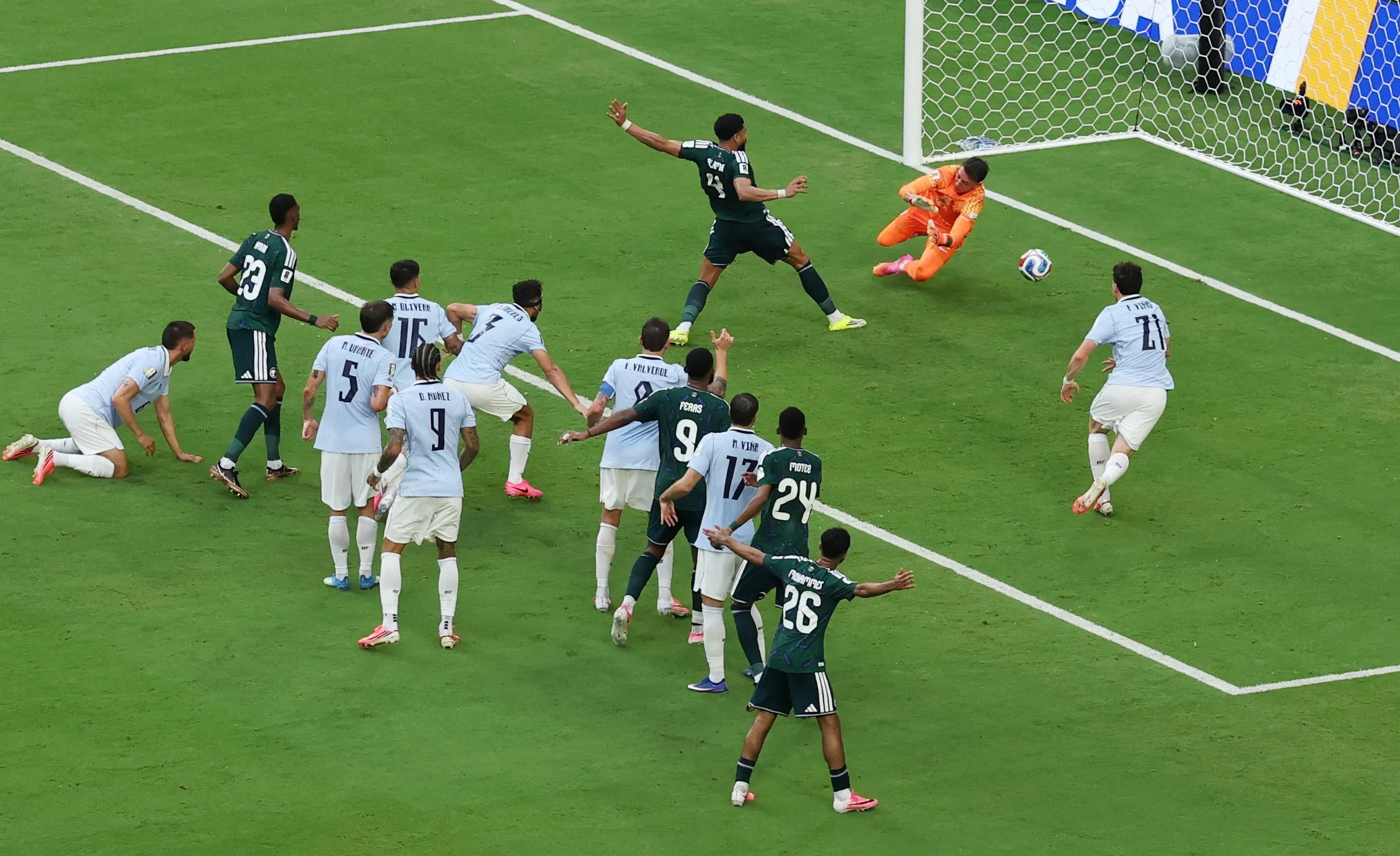
Uruguay earned their draw after overcoming a deficit, having controlled the match for the majority of the first half before Abdulelah al-Amri gave Saudi Arabia the lead against the run of play.
Uruguay’s game preparations faced disruption due to a delay in their flight from Cancún to Fort Lauderdale, illustrating the challenges of hosting a multi-country World Cup. Nonetheless, any travel issues did not seem to impact their performance.
As expected from a Marcelo Bielsa team, Uruguay dominated possession from the start, creating a solid scoring opportunity in the fifth minute. Federico Vinas’s left-wing cross found Ronald Araújo, whose shot was saved by goalkeeper Mohammed al-Owais.
A possible penalty was queried in the 20th minute when Sebastián Cáceres’s shot struck Hassan al-Tambakti’s arm, but it was clear his arm was positioned by his side. Uruguay’s best chance of the first half fell to Vinas, whose diving header was directed straight at Owais.
Supported by a loud contingent of fans dressed in green, Saudi Arabia persevered and was rewarded just before halftime.
Amri had already forced an excellent save from Fernando Muslera with a powerful header from a corner in the 38th minute before scoring from another set-piece three minutes later. Musab al-Juwayr’s cross was met by a header from Tambakti, which Muslera parried, allowing Amri to react quickly and tap the ball into the net. Muslera was likely frustrated with his failure to secure the ball cleanly, a sentiment echoed by Bielsa’s furious demeanor on the sidelines.
In response, Bielsa made two substitutions at halftime, including taking off Darwin Núñez, who, despite the hot and humid conditions, had appeared sluggish throughout the match. It’s worth noting that the former Liverpool forward has only played two matches for Uruguay since February, when he was deregistered by Saudi Pro League club Al-Hilal after they signed Karim Benzema.
Bielsa also repositioned Federico Valverde to a more central role after he was largely ineffective on the right in the first half. This tactical adjustment proved beneficial as Uruguay regained their dominance.
However, Saudi Arabia defended resolutely, restricting their opponents to limited chances from crosses. Vinas and substitute Agustín Canobbio both directed headers wide, while Owais made another impressive save from Manuel Ugarte, whose shot from the right was deflected onto the far post.
Uruguay persisted in attacking down the wings, and an equalizer that seemed inevitable arrived in the 80th minute. Mathías Olivera’s cross was headed towards goal by Vinas, but Owais failed to handle the ball, allowing Maxi Araújo to react quickest and finish neatly with a side-footed effort at the near post.
Owais redeemed himself in injury time, making two crucial saves from Nicolás de la Cruz and Valverde.
After dropping two points, Spain emerged as the true beneficiaries of this outcome and will look to capitalize when they meet Saudi Arabia in Atlanta. Uruguay will return to face Cape Verde on Sunday, presenting yet another test for Fifa’s ticket sales strategy.