


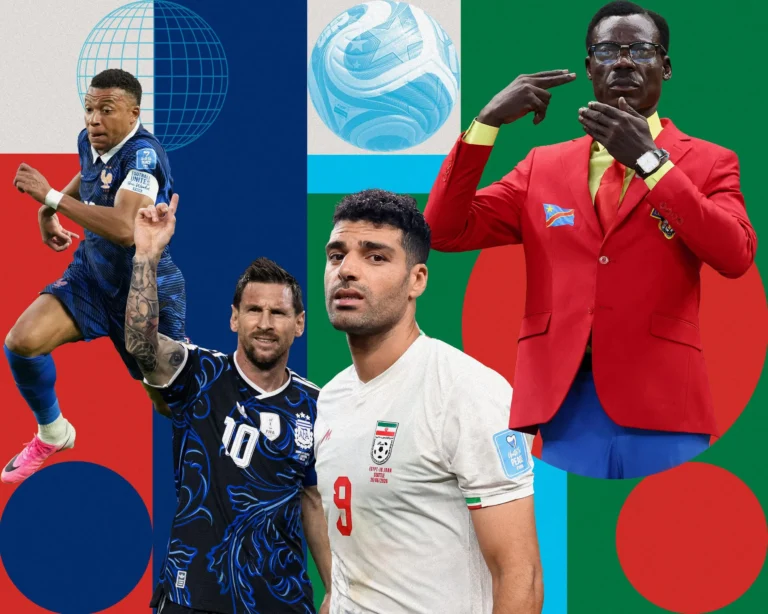
Football has once again taken center stage. This is the essence of the sport, and particularly evident during the World Cup, a tournament known for its resilience. It has weathered the storms of authoritarian regimes, corruption scandals, the grave exploitation of migrant labor, and military rule. It appears that it will endure even amid exorbitant ticket prices and immigration policies that contradict Gianni Infantino’s assertion that this is the most inclusive World Cup ever.
However, these issues are significant. The situation regarding Iran is distinct, yet the treatment of its national team has been egregious. While they managed to remain unbeaten until their elimination due to a last-minute Austria goal against Algeria, one can only imagine how much better they could have performed without the need to change training facilities, with full access to their coaching staff, and without severe travel restrictions.
The visa challenges faced by fans have also tainted the tournament. Reports indicate that both the United States and Canada denied over 80% of applications from specific nations. The World Cup is meant to represent a global celebration. When fans and journalists are unable to attend, it undermines this spirit. Notably, Senegal’s official photographer was barred from entering Canada, and Michel Nkuka Mboladinga, a prominent fan from the Democratic Republic of the Congo (DRC), could only attend a match in Mexico. Additionally, hundreds of Scottish fans were unexpectedly unable to use their authorized travel documents.
Impact of FIFA Policies and Host Country Issues
Such circumstances highlight FIFA’s disregard for its supporters and set a perilous precedent. To question whether host nations should modify their immigration policies for the World Cup overlooks historical norms. They absolutely should; accommodating global events is part of hosting responsibilities. Sub-Saharan African journalists and fans faced difficulties with the Cup of Nations in Morocco; this raises concerns about future improvements for the next World Cup. Why wouldn’t Saudi Arabia in 2034 be selective about who it admits?
The culture surrounding football fans has been compromised in the rush for quick profits. Loyalty is no longer rewarded, and regular fans, who contribute to the vibrant atmosphere, are undervalued. Ticket prices, along with the costs of travel and essentials such as water in stadiums, have become exploitative. Logic suggests that a reckoning is inevitable, yet it seems far off.
World Cup Quality and Performance Highlights
Expansion has proven successful, with minimal dilution of quality. Cape Verde led their qualifying group and could have reached a 32-team World Cup, while the DRC required playoffs yet both added value to the tournament. Even Curaçao managed to secure a draw. However, allowing the best third-place teams to advance is unsatisfactory. This reduces tension and creates complications for teams and their supporters waiting for elimination news, while those already qualified must pause to prepare for their upcoming opponents. Further expansion to 64 teams seems inevitable and, despite the added pressure on hosts, may enhance the competitive aspect.
Despite these issues, the football itself has been engaging and will be what is ultimately remembered. The group stage has seen an average of 2.99 goals per game. Typically, this average decreases during knockout rounds, but if maintained, this could be the highest-scoring World Cup since 1958.
From a marketing perspective, key players have already made their mark: Lionel Messi scored five goals in the group stage, while Ousmane Dembélé, Erling Haaland, Kylian Mbappé, and Vinícius Júnior each netted four. While several teams have faced unexpected difficulties, the exits of Uruguay, Turkey, and South Korea were not particularly surprising. Consequently, the last 32 teams feature compelling matchups or at least the potential for exciting clashes in the Round of 16.
Fan Engagement and World Cup Atmosphere
There has been plenty of drama: Ecuador’s victory over Germany, the DRC’s win against Uzbekistan, and the confusing injury-time events in Algeria versus Austria. Additionally, scenes showcasing spirited fan mobilization have emerged, which were far less feasible in Qatar: Scots in Boston, Colombians in Guadalajara, and Dutch supporters in Kansas City.
All these elements are true and merit recognition. Yet, the World Cup consistently operates on dual tracks. The football is reliably captivating; even during dips in quality, compelling narratives abound. Nonetheless, the political issues, injustices, and other challenges persist, often obscured from view.
- This is an excerpt from Soccer Desk: World Cup edition, a newsletter from the Guardian US that will run regularly during the tournament. Subscribe for free here.
- World Cup 2026
- Soccer with Jonathan Wilson
- World Cup
- newsletters