


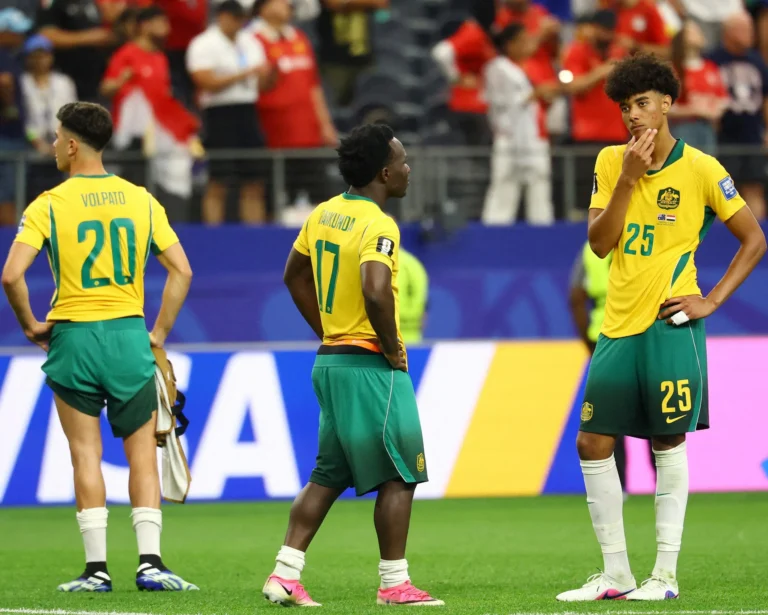

Lucas Herrington should not carry the weight of this heart-wrenching defeat. At just 18 years old, he became the youngest starter for the Socceroos in World Cup history. Unfortunately, his name will forever be linked to one of the most painful moments in Australian football.
After his penalty kick hit the crossbar, Herrington was immediately comforted by Awer Mabil, who acknowledged the deep pain he felt at that moment. As Egypt concluded the shootout, Herrington turned away from the bar that betrayed him, running a hand through his curly hair, overwhelmed with emotion.
Bending over, the teenager concealed his feelings, and Jackson Irvine’s approach indicated the intensity of the moment. Soon after, Nestory Irankunda, who is significantly shorter, offered him a supportive embrace. These two represent the future of Australian football, yet in this instance, they were unable to escape the harsh realities of the present.
Australia now faces at least a four-year wait for a long-sought victory in the World Cup knockout stages. There lingers a troubling thought that they may not find a better opportunity than this one for a considerable time.
Herrington was not the only player wishing for a second chance at the shootout. Harry Souttar, who took the first penalty, appeared fatigued after a grueling 120-minute battle. His attempt was sent over the bar, giving Egypt the upper hand.
Even the strategic decision by Tony Popovic to substitute in captain Maty Ryan late in the game could not change the outcome, as Egypt converted all four of their penalty attempts, concluding the shootout prematurely.
After three hours in this tournament without scoring, the Socceroos found themselves trailing 1-0 at halftime, with spirits plummeting. The situation worsened when Jordy Bos attempted to put weight on his injured left knee after a challenge, discovering he could barely walk. Aside from a couple of half chances, the Australians struggled to penetrate the Egyptian defense during a first half characterized by tactical stalemate, with both teams focused on avoiding being pressed.
Initial Australian optimism, sparked by Cristian Volpato’s shot that grazed the crossbar and a determined run from Bos into the box, was shattered by Egypt’s opening goal. Australia easily relinquished ground on the right side during a breakdown of their pressing strategy, leading to a foul by Jackson Irvine against Ziko.
Emam Ashour took the free-kick, which Irvine blocked; however, the rebound fell to the unmarked Egypt No. 8 at the back post, who headed it home. This moment underscored Egypt’s attacking prowess, leaving the Socceroos in a difficult position.
With Bos sidelined in the second half, Kai Trewin made his World Cup debut in the right-back position. Almost immediately, his opponent nearly scored, as a frantic start to the second half threatened to extinguish Australian hopes.
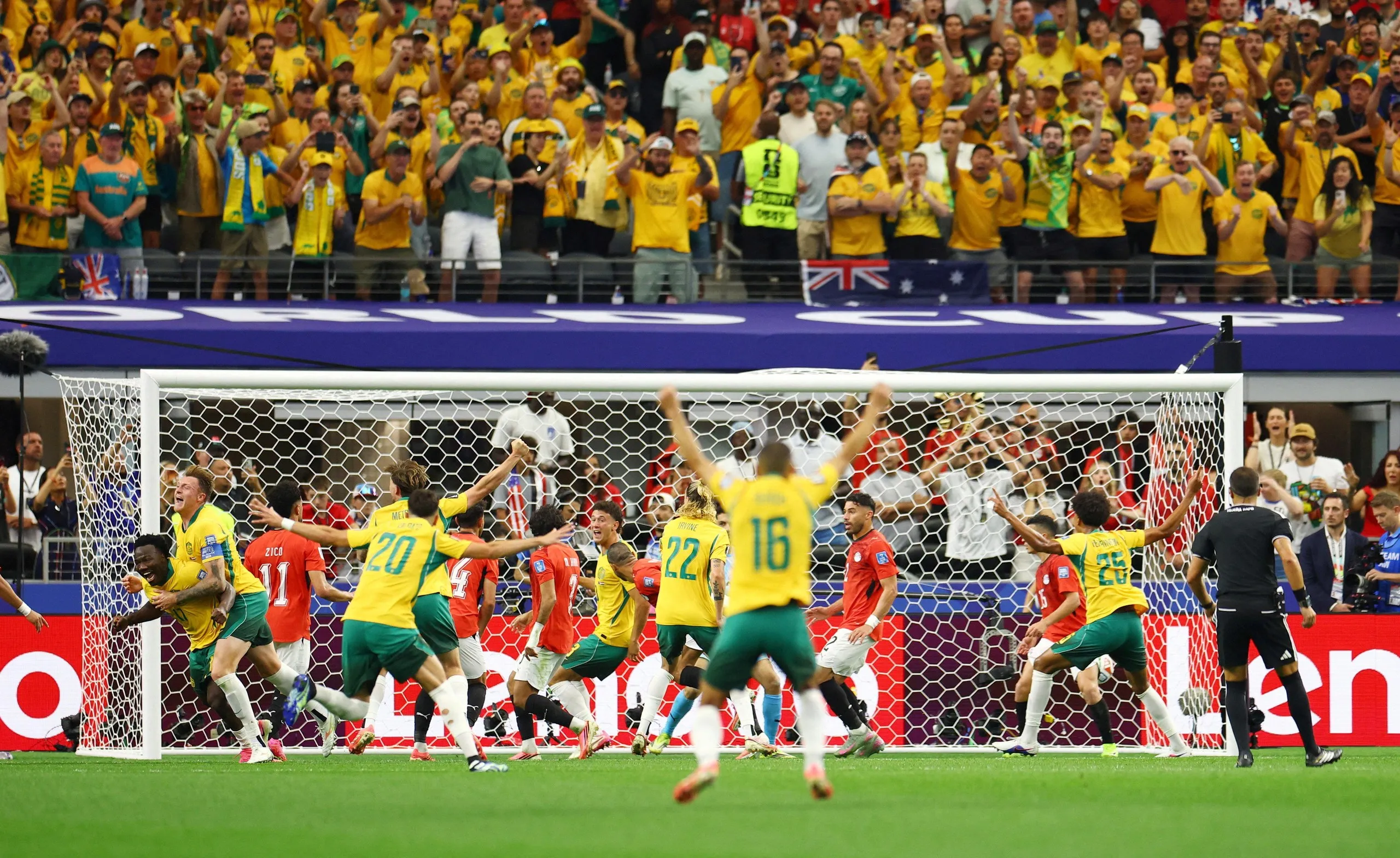
However, the Socceroos regrouped and achieved something they had failed to do throughout the tournament: they scored while trailing. Although officially recorded as an own goal by Mohamed Hany, Aiden O’Neill’s exquisite looping delivery from the left side of the box deserved recognition.
This arena in Arlington, surrounded by 24,000 parking spaces, stands as a modern sports cathedral, a temple for American sports – and now soccer. Yet, this match may not have gained many supporters among the still-skeptical audience. Given the numerous delays, a few more advertising breaks might have been welcomed. After 100 minutes of play, the teams had managed a combined total of just four shots on goal.
For fans of both Australia and Egypt, the match was filled with nail-biting tension as the score remained locked at 1-1. Crosses were repeatedly launched and fiercely defended, aided by Patrick Beach’s punches and the Egyptian defense, which held firm despite their vulnerabilities.
In the final moments of regular time, Mo Salah came alive, delivering a cross to Ramy Rabia, who seemed destined to score until Beach deflected the ball over. Salah then took a shot himself moments later, before setting up a final opportunity for the Pharaohs that was thwarted by Souttar, who ensured it would not reach the corner.
Concerns about Salah’s fitness were alleviated by his performance during this sequence, highlighted by the smile he shared with Souttar at the coin toss for extra time. Nevertheless, even Salah displayed fallibility when he sent a bouncing ball over the bar early in extra time.
As time dwindled, neither side could find the decisive goal, even as Egypt applied relentless pressure on the Australian goal. Both teams stood on the brink of history in their quest for a first knockout victory, but the shootout would only grant that opportunity to one side.
- World Cup 2026
- Australia national football team – Socceroos
- Egypt football team
- World Cup
- Australia sport
- analysis