


In the span of 37 minutes, England found themselves in a state of possession paralysis against Argentina, holding just 12%. This stark contrast suggests that Spain will pose a significantly different challenge in the World Cup final. Unlike the English approach, which often reverts to a defensive stance when ahead, Spain thrives on maintaining control, averaging 64% possession throughout the tournament.
Spain’s playing style has been distinct since Vicente del Bosque took over from Luis Aragonés in 2008. This evolution has brought hope to England, who have historically struggled on the international stage. Aragonés ignited a transformative movement, leading Spain to three European Championships and a World Cup, with the potential for more glory this Sunday.
While Spain’s commitment to ball retention can occasionally lead to predictability, Luis de la Fuente has revitalized the juego de posición framework. Observing a contrasting team like Argentina in Atlanta on Wednesday, which struggled to maintain possession, highlights the value of a system that prioritizes ball security.
De la Fuente’s deep roots in the system further bolster Spain’s prospects. Unlike many high-profile coaches who have stumbled in this tournament, including Thomas Tuchel and Carlo Ancelotti, De la Fuente has a history with his players from their youth team days. Similarly, Argentina’s Lionel Scaloni ascended to the senior role after his tenure as under-21 coach, ensuring familiarity with both the players and the tactical approach.
Joachim Löw’s successful tenure with Germany, culminating in a World Cup win in 2014, mirrors this pathway. England’s resurgence, marked by four semi-final appearances in five tournaments since 2018, reflects the impact of Sir Gareth Southgate’s overhaul of the academy system and the England DNA project, which began during his time as under-21 manager.
At the highest level, international football increasingly hinges on tactical systems. Under Scaloni, Argentina has made a conscious effort to embrace a more traditional style, emphasizing short passing over the physical play characterized by long balls and larger forwards. This tactical shift is evident in the focus on players like Boca Juniors’ Leandro Paredes.
Paredes, as highlighted by analyst Matías Manna, plays a crucial role:
“He wins the ball a lot from the front and knows how to defend behind him,”
“If a team is built around passing, it’s important to have a holder like Paredes who interacts well with the inside players and the No 10. He’s the Argentinian who best finds Messi between the lines. You can’t analyse the game individually. The game is in the relationships between players.”
He further explained,
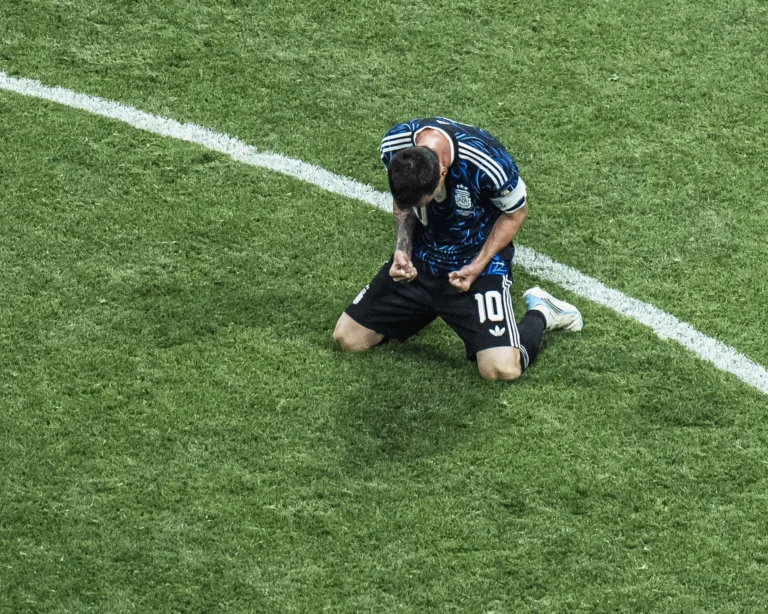
Manna emphasizes the necessity of integration among players, viewing the tactical and emotional connections as more vital than mere formation. Under Scaloni, Argentina’s unity and shared ambition to secure a second World Cup for Lionel Messi is their most significant strength, aiming to surpass Diego Maradona’s legacy.
While Spain has moved away from the notion of la furia, Argentina has embraced it. The strategy isn’t solely to wait for Messi’s brilliance, but his ability to influence matches through skill and determination is invaluable. His late-game heroics have defined Argentina’s knockout performance.
Argentina is expected to implement a 4-5-1 formation, contrasting with their earlier 4-4-2 setup, positioning Messi as a loose forward with Julián Álvarez on the left. A critical decision lies in whether to deploy Simeone as a disruptive force on the right or opt for Rodrigo De Paul, Messi’s trusted protector.
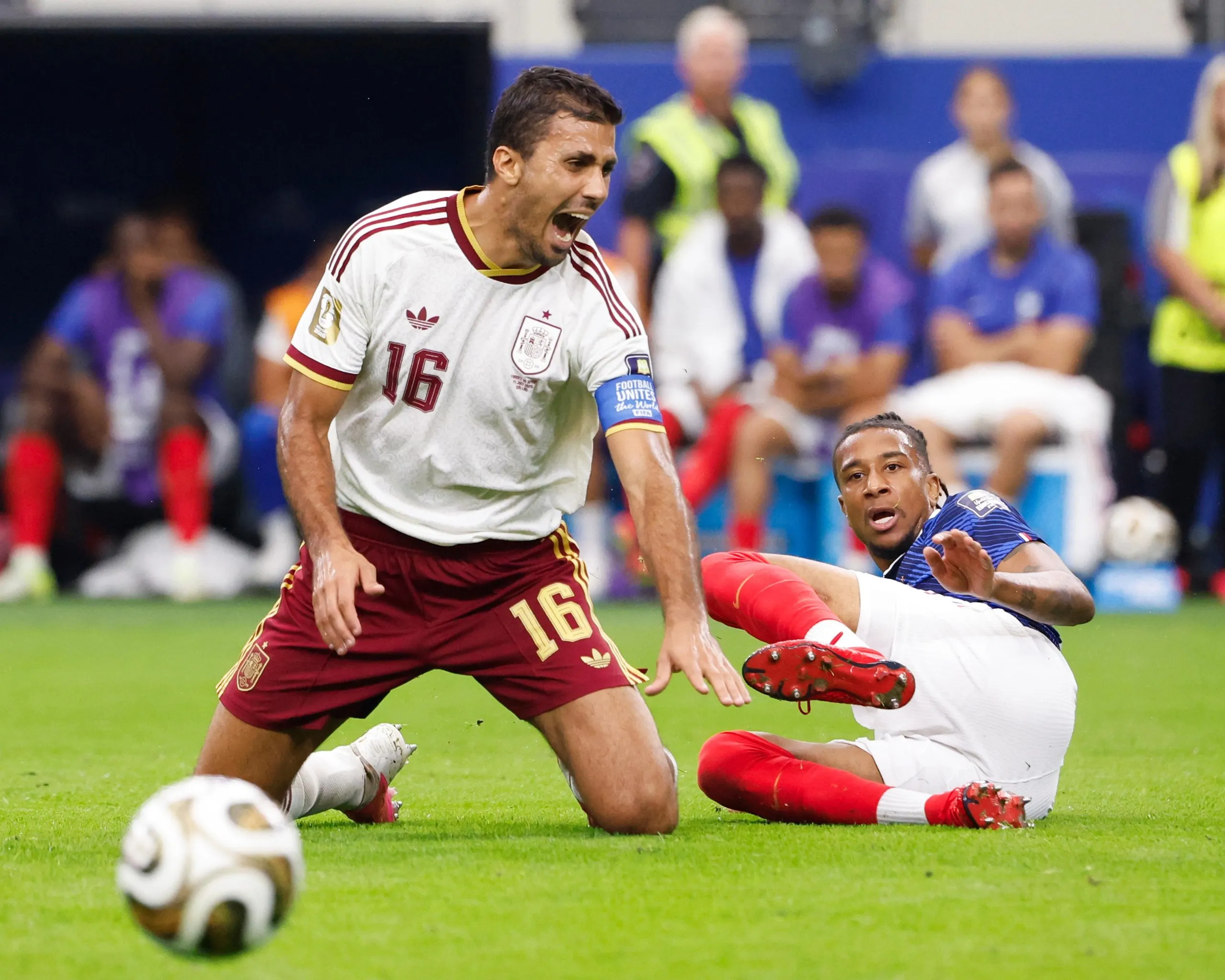
The primary objective will be to disrupt Spain’s midfield dynamics, possibly assigning Alexis Mac Allister or Enzo Fernández to shadow Rodri, who functions as the pivotal player in Spain’s midfield.
Argentina’s vulnerabilities were highlighted by their matches against Cape Verde and Egypt, which showcased their struggle against pace. England, however, did not capitalize on this weakness, and Spain may also find it challenging. The Spanish squad’s strength during the last Euros stemmed from their ability to blend possession with a direct approach in wide areas, although injuries have hindered their effectiveness in this tournament.
On the left, Nico Williams, who impressed during the Euros, has only appeared as a substitute, while Álex Baena has filled in as a central creator lacking pace. On the right, Lamine Yamal, nursing a hamstring issue at the tournament’s start, has improved but remains short of peak performance.
This final epitomizes the classic battle between a methodical team and one riding an emotional high. Passion carries risks, potentially allowing composed teams to capitalize on mistakes. If Spain gains the lead, they could easily frustrate Argentina by controlling possession and striking on the counter.
Nevertheless, Argentina appears more self-aware than Brazil was in 2014, better equipped to direct their emotional intensity. As the match progresses without a goal, the likelihood of Argentina fulfilling Messi’s legacy only grows.
- World Cup 2026
- Inside football
- World Cup
- Spain
- Argentina
- Lionel Messi
- comment