


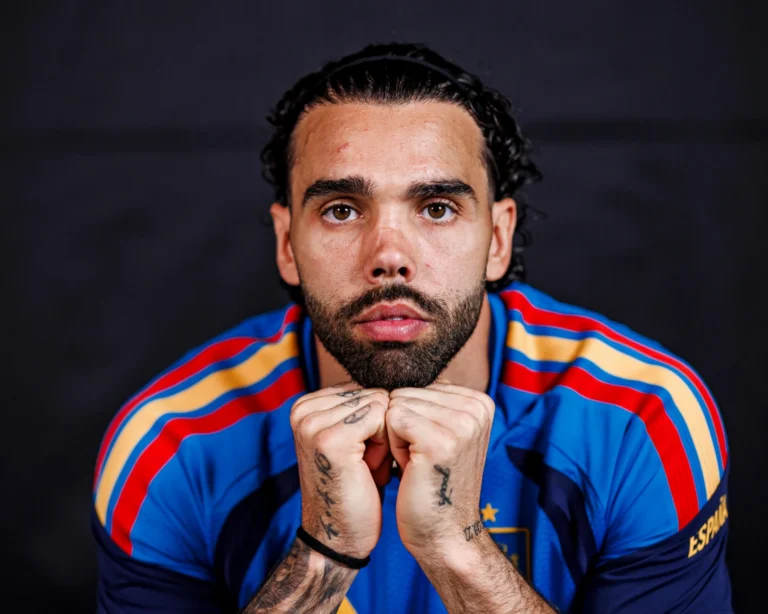
“N o, no, there’s someone else,” David Raya exclaims, leaping from his chair at Spain’s training camp in Chattanooga, Tennessee. He reaches for his phone from his wash bag and begins to scroll. “‘… the goalkeeper, who played in yesterday’s match, was at Southport on loan from Oxford United…’ Yeah, Max Crocombe. I think that is right” he continues, reading aloud: “That time took me where I am now,”s match was on loan from Oxford United to Southport…’ Yes, Max Crocombe. I believe that is correct.”
This brings the total to four—a newly added name to the list. Peter Withe, Stan Mortensen, himself, and now New Zealand’s top goalkeeper: these are the players who have worn the Southport jersey and then competed in a World Cup.
Raya’s initial senior competitive appearance took place in front of 1,405 spectators at Macclesfield in the Conference. In stark contrast, his most recent match unfolded before 61,035 fans at the Champions League final in Budapest, marking him as only the third player to ascend from non-league football to the elite tier of club football. The others in this exclusive group are Steve Finnan and Chris Smalling. Just four days later, after a celebratory open-top bus parade for their Premier League title, he joined the squad for the World Cup, which he describes as the pinnacle of his career.
He cherishes those moments rather than the more recent experiences. “I was with the Under-21s [at Blackburn] and there were no demands, no pressure, no sense that the three points really mattered,” he reflects. Joining Southport at age 18, he recalls, “I told the club I needed minutes in professional football to experience what it means to have to win. I couldn’t go to League One obviously – I didn’t have the level – but going to the fifth tier shaped me.” He expressed a need for genuine playing time in professional football to grasp the importance of winning. “If you talk to the chairman or anyone else on the board at Southport they would tell you they were thinking: ‘who have we signed here?!’”
The opportunity arose when Liam Roberts, currently at Mansfield, suffered an injury. Initially, the transition was rocky. “I was 18, 19 years old, playing in a league that was so, so physical. I had been used to playing in the Under-21s where it was all on the floor, playing nicely, and suddenly you’re being crashed into by 30, 35-year-old men who instead of going for the ball are going for the goalkeeper. “But once I got used to the league, earned my teammates’ trust, those were the three or four best months of my career in terms of learning.” Raya recalls. “You learn that it’s not as easy as when you are used to things being done for you. It’s people trying to make it to the end of the month. You have teammates who need the win bonus to pay the mortgage. You play midweek, five or six hours away, and they’re up at 6am to go to work. You see the reality, what football is, and it shapes you; you take nothing for granted. And I enjoyed it a lot, a lot – even if they did smack me all over the place. I had black eyes, pain everywhere, but I liked it and I’m so grateful. And here I am.”
“Those at the Champions League final had a few more days, so I got there on the Wednesday night,”
After that season, he returned to Blackburn, where Crocombe joined Southport. Although his playing time at Ewood Park remained uncertain—he appeared in just five matches the following season behind Jason Steele—he had undergone significant transformation, both mentally and physically, preparing for the obstacles ahead.
“I arrived a bit before Fabián [Ruiz]. I was saying hello to some of the others in reception when he arrived. I went to say congratulations; that was almost the first thing I did. I couldn’t really talk [to him] after the final; I just didn’t have it in me. The next day we talked about the game properly. Just two mates chatting … I was happy for him that he could lift the trophy for a second time.”
Just beyond the level crossing, where the Chattanooga train runs, nestled among the trees, lies the World Cup base that Spain has established at Baylor Preparatory School, three miles from the city. Training has wrapped up for the day, and his teammates await the goalkeeper’s arrival on the golf course before heading back to their hotel near the downtown aquarium. They have already spent two weeks together, starting in Las Rozas, located 25 km northwest of Madrid; if all goes as planned, they will have another five weeks together, culminating in New Jersey—once rivals, now united as teammates.
“The thing is that when you lose a Champions League final, when you get there for the first time in 20 years and then you lose on penalties, it destroys you inside,” Raya recounts. “I left there with my head held high because of the work we had done all year but I was broken inside because we were so, so, so, so close … “ There’s a pause. “You don’t know when you’ll play another one or even if you will play another one,”
However, “When I went home, I was broken. We stayed [in Budapest] over night and travelled the next morning. That night is very, very hard. The following morning too. [But] then you reach the Emirates stadium, you see the fans and that lifts you. When you come out on the bus with the Premier League trophy and see all the people, what it means to them, you realise what you’ve done. “Personally, those were very, very hard moments but you take a step back and look at it with perspective. You think about the way the club was a few years ago and the way it is now, how each year we got better in the Champions League, how we won the league for the first time in over 20 years … and that gets a smile out of you. That’s when you think next year we can do better, and win the Champions League.” may not fully encapsulate his feelings. “Why aren’t we talking about David Raya? It’s unbelievable. It’s terrifying.” the goalkeeper confesses. “It’s natural with Joan and Unai being in Spain. I’ve been away a very long time. I remember the first time I came to selección, people asked who I was.”
There’s a brief pause. “The idea never crossed my mind,” Raya reflects. “I always wanted to play for Spain and never thought about [England]: I wouldn’t have felt it, I would have felt an outsider. However long I was in England, I feel Spanish.”
“Some look for a debate or a headline, but competition is good,”
Now, he aims to replicate that success at the World Cup, just like his idol, Iker Casillas.
Despite being acknowledged as the top goalkeeper in the Premier League and possibly in Europe last season, along with winning the Golden Glove for the third consecutive year, Raya found himself on the bench for Spain’s opening match against Cape Verde. Nor did Joan Garcia, La Liga’s best performer. Instead, Athletic Club’s Unai Simón took the starting role. The fact that Simón has held the No. 1 position for six years does not diminish the ongoing debate surrounding a stable and successful national team.
This debate has largely shifted focus from Raya to Garcia, particularly since Raya’s outstanding performances in this year’s Champions League have brought him into the spotlight. The absence of a Madrid or Barcelona affiliation means he lacks a supporting lobby. Frustrated with the ongoing Simón/García discourse, Luis de la Fuente, on the day he announced his squad, stated: “I don’t think there was a debate then,” Raya appreciated the backing, acknowledging that being in England may have led to some oversight. “That one is harder, quite honestly,” he responds. “Here, you’re exposed to the world, but you don’t have the pressure of wondering if you’ll make it to the end of the month. Media and public exposure comes with being a footballer and if you’re going to play at this level you have to be ready. I don’t find it difficult. I know I’ll make mistakes. Not everyone is going to like you. I’ll leave the debate for others.”
It’s not an exaggeration. Back in March 2022, “Sure, it’s different with goalkeepers: only one can play. But we work together every day and we’re close. We help each other. The position is in very good hands, whoever plays. You come with an open mind, try to help – whatever your role. I’m very competitive but I always respect what the manager asks.” was indeed the headline in major Spanish media outlets. Having spent his entire professional career in England since leaving Cornella at 16, he was called up after featuring in just 15 top-flight matches. He even had the option to represent England. “You treat everyone the same way,” he insists. “When you’re first choice you can’t treat anyone badly; when you are second or third choice you can’t treat anyone badly either. I have a good relationship with Kepa [Arrizabalaga], with Unai, with Tommy Setford, and with Joan, just as I had with [Álex] Remi[ro]. If a teammate’s down, it’s up to you to pick him up. They do the same for you. People say [competing] goalkeepers don’t get on well: I have always got on well with my teammates and I hope I always will. If the atmosphere wasn’t good, it would be very hard to work. “It’s joy to be here. It’s my second World Cup and it’s a dream. I’ve had a successful year at Arsenal: I won my third Golden Glove and the Premier League. When you’re little you think about the World Cup. I was 15 when Spain won it in 2010 and I live this with total happiness and enthusiasm. It’s not every day you can be at a World Cup.”
“Some seek out a debate or a headline, but competition is beneficial,” he adds. A term he frequently returns to is “naturally.” How do you handle the debate? Naturally. How do you cope with not being the first choice for your country, knowing you might spend six weeks without stepping on the field? Naturally. How do you and your teammates navigate your competitive relationships? Naturally. He has faced similar situations before; remember the discussions surrounding his signing for Arsenal, which already had Aaron Ramsdale? Even when he arrived at Southport, he was one of eight goalkeepers.
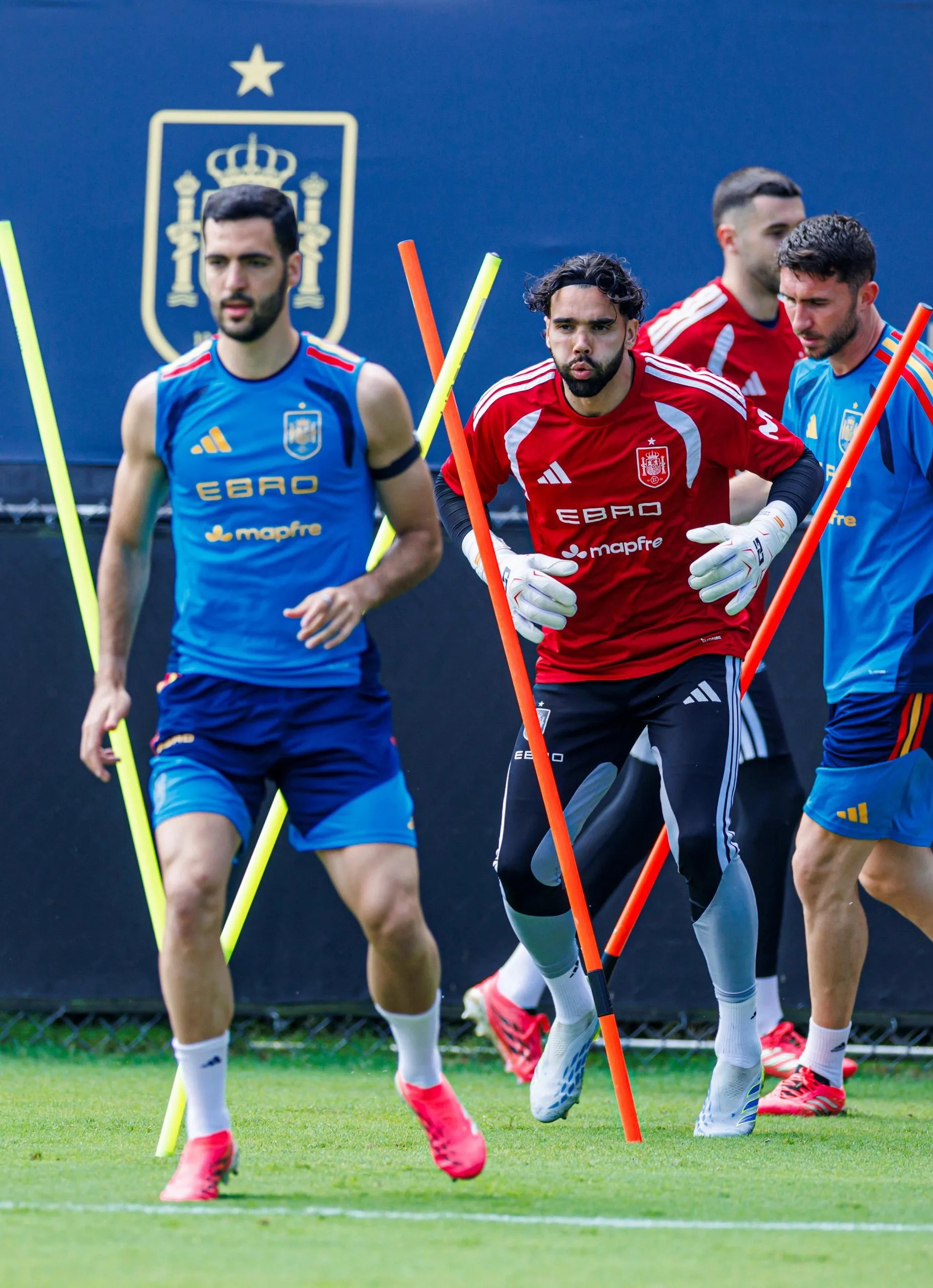
He chuckles now. “I don’t think there was a debate then,” he says. The scrutiny is different now; it comes with a new type of pressure. “That’s harder, to be honest,” Raya admits. “At this level, you’re exposed to the world, yet you don’t have the pressure of worrying about making ends meet. Media and public scrutiny accompany being a footballer, and if you want to play at this level, you need to be prepared. I don’t find it challenging. I know I’ll make mistakes. Not everyone will appreciate you. I’ll leave the debate for others.”
“It’s different with goalkeepers: only one can play. But we train together every day and maintain a close bond. We support each other. Regardless of who plays, the position is in capable hands. You come with an open mind, striving to contribute—whatever your role may be. I’m highly competitive, but I always respect the manager’s decisions.”
“You must treat everyone equally,” Raya insists. “When you’re the first choice, you can’t treat anyone poorly; and when you’re second or third choice, you must also be respectful. I have strong relationships with Kepa Arrizabalaga, Unai, Tommy Setford, and Joan, just as I did with Álex Remiro. If a teammate is feeling down, it’s your responsibility to uplift them, just as they do for you. People say that competing goalkeepers don’t get along, but I’ve always had great relationships with my teammates, and I hope to continue doing so. If the atmosphere isn’t positive, it would be incredibly difficult to work.”
“It’s a joy to be here. This is my second World Cup, and it’s a dream come true. I’ve had a successful year at Arsenal: securing my third Golden Glove and winning the Premier League. As a child, you envision the World Cup. I was 15 when Spain won it in 2010, and I am living this moment with complete happiness and enthusiasm. It’s not every day that one gets to participate in a World Cup.”
Not everyone gets the opportunity, especially someone who started at Southport. But here stands David Raya. “And Max Crocombe,” he adds.